
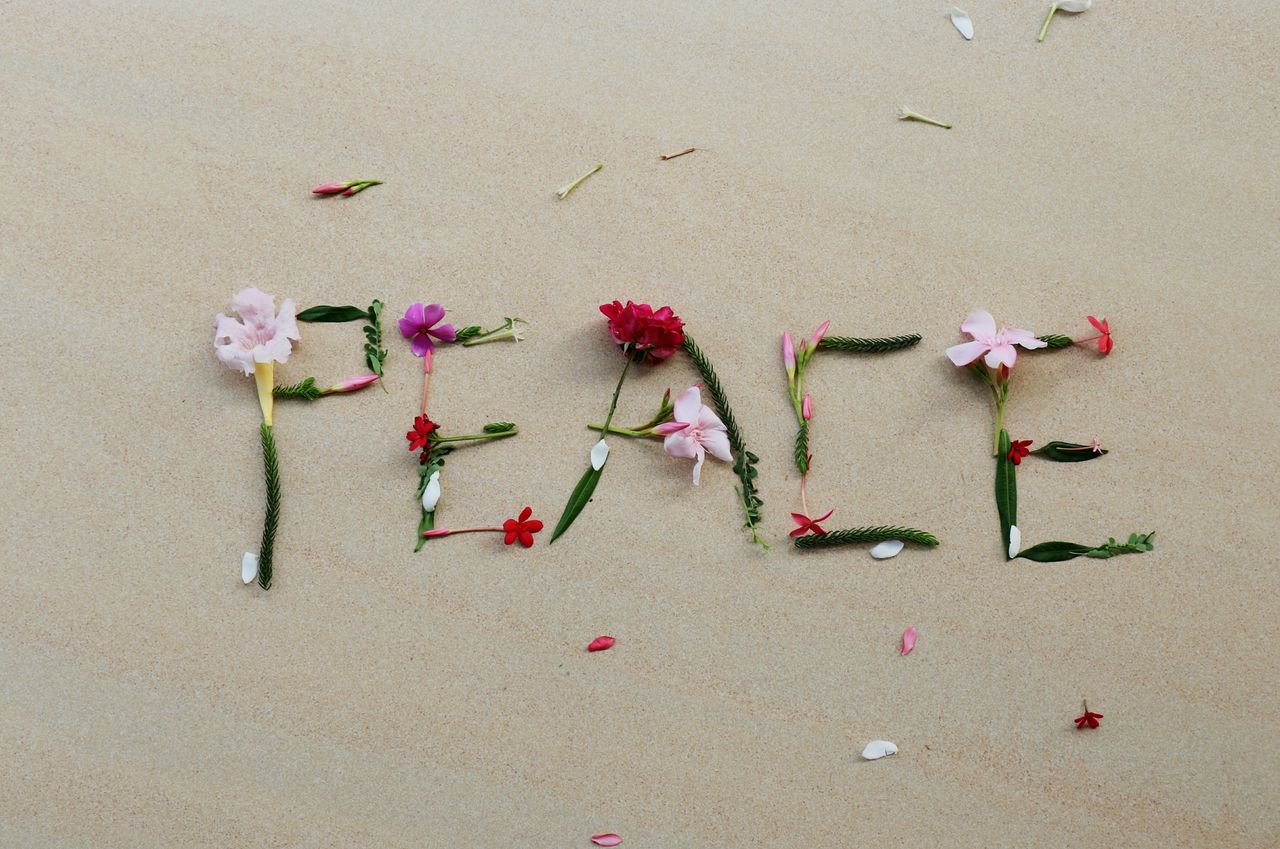
What if peace isn’t something you find when life becomes quieter? A personal reflection on inner safety, self-trust, boundaries, and learning what peace really means.
I spent years believing peace would come when my life became quieter. I imagined it waiting for me in a different version of my life—one that was quieter, more stable, less triggering, more organised; a life where fewer things went wrong and I finally had enough space to breathe.
For a long time, peace felt like a destination. Something I could eventually reach if life became predictable enough, comfortable enough, and somehow more within my control. I thought that if my circumstances were finally in my favour, peace would naturally follow.
Looking back, I can see that I had created an image of peace without ever really asking myself whether it was mine. It took changing my life to realise that peace had much less to do with my circumstances than I thought.
The Version of Peace I Had Learned to Believe In
We are constantly exposed to idealised versions of what a peaceful life is supposed to look like: a slower routine, a certain kind of relationship, financial comfort, emotional balance, more freedom, more time, the feeling that everything is finally “in place.” We see these images so often that they can quietly become part of our own definition of peace.
And that is what makes inherited beliefs so interesting. We can spend years believing something simply because it has been repeated, modelled, romanticised, or presented to us in ways that feel familiar. Eventually, we stop questioning it. I started to wonder if that was what I had done with peace.
Maybe I had never truly experienced the feeling I wondered about. Maybe I had simply learned to recognise certain circumstances as peaceful and assumed that the feeling would naturally follow. But what happens when you finally change some of those circumstances and realise that something inside you is still waiting?
That question became much more important to me than finding the perfect answer.
When My Life Was Full but I Wasn’t at Peace
I used to live a very different kind of life in Brazil. My routine could take me from getting out of bed at six in the morning to going to the gym, working, studying, and continuing through a long list of responsibilities until I was exhausted enough to finally sleep.
Even when I tried to rest, I could still feel the tension in my body. I would meditate, take weekends off, try to slow down, but somehow the feeling of rest did not fully reach me. There was physical exhaustion from the amount of activity I was carrying, but there was also an emotional exhaustion that came from constantly functioning and rarely stopping to ask myself what I actually wanted or needed.
I was functioning, achieving, moving, and doing everything I believed I needed to do; but I was not always choosing. And even when I stopped physically, something inside me seemed to continue moving. Looking back now, I can recognise how little space there was for simply being.
I now understand that my life had become organised around a kind of constant readiness. Not necessarily “survival mode” in the dramatic way we sometimes imagine it, but the ordinary kind of constant readiness that can develop when someone becomes accustomed to being responsible, productive, alert, and available.
My body had learned to respond to the rhythm of that life, and eventually that response seemed to continue, even when the original demands were no longer there. At the time, I probably would have said that I simply needed more time to rest, a better routine, or a break from everything I was doing. I didn’t yet understand that there is a difference between having time to rest and knowing how to feel safe enough to rest.
When My Environment Changed, but Something Inside Me Didn’t
Eventually, during the COVID period, I moved to a new country. My external reality changed considerably. The noise reduced, my routine became calmer, I had more space, and I developed a different relationship with time. In many ways, it felt as though I had finally arrived at the kind of life I had imagined when I thought about feeling peace.
And something interesting happened. I started experiencing life from a different place, but I also began to notice how much of the old version of me had followed me there. Even though my circumstances had changed, my body was still responding to years of living with constant activity and alertness. It was almost as if my external life had slowed down before my internal experience had caught up with it.
This made me rethink something I had never questioned before: the idea that a holiday, a break, a quieter environment, or a change in lifestyle automatically creates peace. It doesn’t necessarily. You can leave work, change your surroundings, sleep more, go somewhere beautiful, and still carry the same tension with you. The environment may be peaceful, while internally you are still preparing for the next demand.
Our nervous systems can become accustomed to certain patterns. After long periods of stress or heightened alertness, anticipating, scanning, preparing, and staying activated can begin to feel familiar. And when activation becomes familiar, calm can sometimes feel surprisingly unfamiliar.
Sometimes slowing down creates the strange feeling that you should be doing something else. Sometimes quiet feels uncomfortable. Sometimes, even when nothing is wrong, your body seems to be waiting for something to go wrong.
This was the point where I had to let go of something much bigger than my old routine: the version of me who believed she already knew what peace was supposed to look like. And that meant embracing something I wasn’t very comfortable with at first: the unknown. Because if the peace I had imagined wasn’t necessarily the peace I needed, then I had no ready-made answer for what would come next.
And, thinking to myself now, perhaps this is where healing often begins. Not when we finally discover the right answer, but when we become willing to question the answers we have been living by.
My Path to Healing: Learning to Meet Peace Instead of Chasing It
Once I started being aware and understood that I was trying to recreate an idealised version of peace throughout my life, I could finally become curious about my own experience of peace. I started noticing the moments when I said yes while something inside me was saying no. I noticed how often fear was influencing my choices—fear of disappointing someone, being misunderstood, being rejected, creating conflict, or simply not being the person someone expected me to be.
This was where boundaries became much more meaningful to me when it came to feeling peaceful. I didn’t suddenly become someone who could say no without discomfort. Instead, I started paying attention to the discomfort itself. What was I afraid would happen if I chose myself?
Sometimes, I still said yes. But then I began practising something different. I said no when I meant no. I noticed the fear. I stayed with the discomfort. I reassured the part of me that was afraid of rejection instead of allowing that fear to make the decision for me.
And slowly, my body began to experience something new: I could protect myself and still be okay. I could disappoint someone and still be okay. I could be misunderstood and still be okay. I could choose myself without abandoning anyone else. That experience created something that thinking about peace never could. Trust. Self-trust.
In that process of awareness, I also began noticing the physical signs that I was moving back into that familiar state of constant readiness: tension, urgency, overthinking, hyper-awareness, the feeling that everything needed to be solved immediately. Instead of seeing these reactions as flaws, I started seeing them as information. Something in me was activated. Something needed attention.
My inner work became less about fixing myself and more about building a relationship with myself that I could actually rely on. I started allowing myself to pause without immediately filling the space. I learned to breathe without rushing towards the next task. I became more intentional about the environments and relationships I allowed close to me. I started noticing where I felt I had to perform, explain, shrink, or remain guarded, and I became more willing to choose differently.
I also had to learn how to tolerate calm. Instead of immediately filling quiet moments with distraction or another responsibility, I started staying with them. Just a little longer. I allowed my body to experience something it had not always been familiar with.
I was not simply thinking myself into peace. I was giving my body experiences of safety.
And over time, something changed.
The Peace I Feel Today
Today, I don’t search for peace because I know that it’s not something you arrive at. Consequently, I don’t expect life to change around me before I can feel it. At the same time, I don’t expect myself to never become anxious, afraid, frustrated, or triggered again. I am human, and old patterns can still show up.
The difference is that I no longer see those moments as proof that I have lost my peace. I can notice what is happening, understand what has been activated, listen to myself, and return. For me, peace has become much less about what happens around me and much more about the relationship I have built with myself—one based on safety and trust.
That inner connection is about knowing that I can count on myself. It is recognising when fear is speaking and knowing that I don’t have to automatically obey it. It is being able to set a boundary without believing I have done something wrong. It is choosing people and environments where I don’t have to abandon myself to belong. It is being able to sit in stillness without immediately feeling that I should be doing something. It is being present without needing to perform.
And perhaps most importantly, it is knowing that I don’t need to protect myself from my own emotions. I can feel fear without becoming fear. I can experience discomfort without assuming something is wrong. I can be triggered without blaming myself for it.
My body and my inner world no longer feel like two separate places I have to manage. There is a connection there now—a sense that I can listen, respond, and trust myself. That is what peace means to me today. Not a permanent state of calm, but an internal sense of safety that I continue to choose and strengthen through my daily life.
And this is why I no longer believe that we “arrive” at peace. We learn to live it.
What Healing Taught Me About Peace
Perhaps the most important part of my experience was understanding that I first had to let go of the version of peace I thought I was supposed to find. I had to question the beliefs I had inherited, tolerate not knowing what would replace them, and allow myself to discover something that could not have been fully explained to me beforehand.
Because sometimes healing begins exactly there: when we challenge what we have always believed and become curious enough to let the unknown show us something we didn’t yet know about ourselves.
For me, that discovery was that peace was never simply about having fewer things to worry about. It was about developing a deeper inner connection, where my body could gradually experience more safety and less of that constant state of activation, and where I could trust myself enough to make choices that protected that connection.
What I understand now, both through my own experience and through the psychological knowledge I bring into my work, is that what we interpret as an inability to relax can sometimes be something more complex.
Taking a break does not necessarily teach us how to feel safe. Changing our circumstances can be deeply important, but our internal experience does not always change at the same pace.
This is also why I see therapy as a meaningful space for this kind of exploration—not because it creates a life where nothing triggers us, but because it can give us room to become curious about what we have learned to believe, what we have learned to expect, and what happens when we begin responding differently.
It can become a place where we learn to listen to ourselves without immediately judging what we hear; where we begin setting boundaries without automatically equating them with rejection; and where we slowly develop the kind of inner relationship that allows us to feel safer within ourselves.
If something in my experience resonates with you, perhaps you don’t need to start by asking:
“How can I find peace?”
Maybe a more interesting question is:
“What would I have to let go of in order to discover what peace actually means to me?”
Because real peace may not be something waiting for you in a quieter life, a different relationship, a better routine, or a future where everything finally makes sense.
Perhaps peace begins when you stop trying to arrive somewhere. And start learning how to feel at home within yourself.
Continue Your Journey
If this reflection resonated with you, you can explore more reflections on my BLOG, where I write about emotional patterns, relationships, self-awareness, and the ways we learn to understand ourselves more deeply.
If you feel ready to explore your own inner world with more support, you’re welcome to book a therapy session with me. Therapy can offer a space to slow down, become curious about what you have learned to believe, and begin building a relationship with yourself that feels safer and more trustworthy.
If you’d like to support my work, you can do so here. Your support helps me continue creating and sharing free psychology resources.
Warmly,
Andressa
Share this article with someone who might need it:

